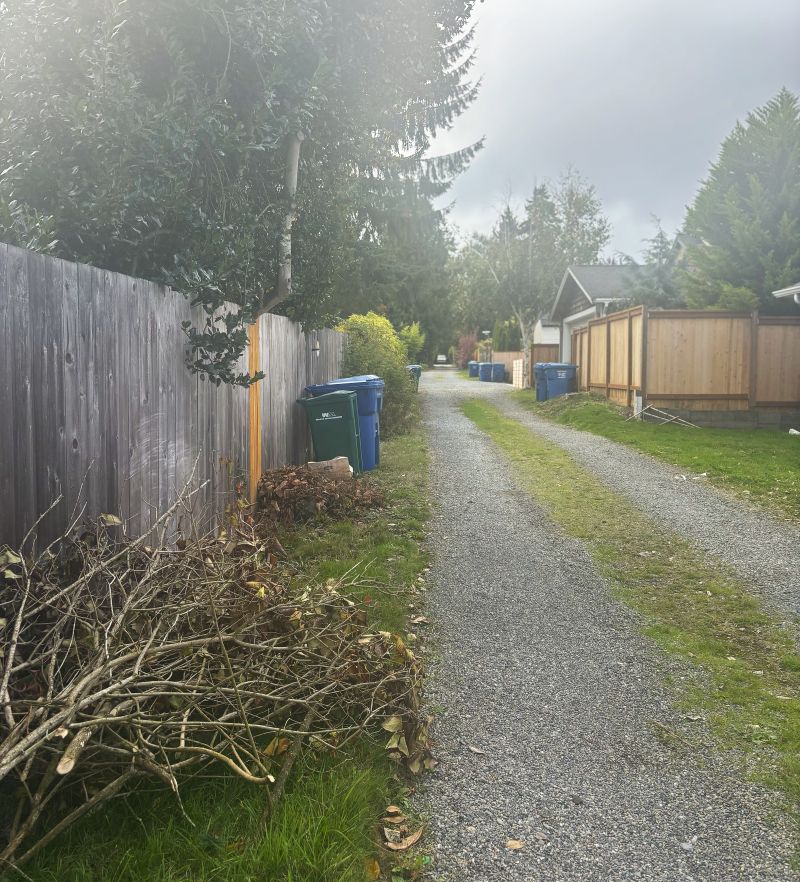
Many Seattle residents rely on alleys for garbage, recycling, and food/yard waste collection. Vegetation like trees, branches, hedges, and bamboo grows quickly in our region and can begin to reach into the alley, limiting the space our collection trucks need to safely enter and maneuver. When that happens, service for the entire alley can be disrupted.
This blog post supports Seattle Public Utilities’ proactive alley vegetation letter. It’s designed to help neighbors understand why regular tree trimming matters, and how we can work together to keep alleys safe and accessible for everyone who shares them.
Maintaining vegetation in alleys is a community effort. When neighbors trim and coordinate early, everyone benefits:
- Reliable solid waste service for all homes in the alley
- Fewer disruptions, missed collections, or temporary street-setouts
- Safer alleys for residents, pedestrians, cyclists, and drivers
- Better long‑term tree health and growth
- Shared understanding of responsibilities, especially where vegetation crosses property lines
SPU sends proactive reminder letters seasonally to account holders with past vegetation issues or when drivers notice vegetation that may become an issue soon. These letters are reminders not violations. They’re simply an early heads‑up to avoid service impacts later.
If vegetation is later confirmed to be obstructing alley access, SPU issues a regulatory vegetation compliance letter. SPU sends the letter, but the standards come from the Seattle Department of Construction & Inspections (SDCI) and the Seattle Municipal Code.
You can review vegetation requirements on the SDCI Weeds & Overgrown Vegetation page as well as technical guidance on SDCI CAM 611 – Vegetation and Trees (PDF).
How to Trim Vegetation
Most trimming can be handled with basic tools. You can:
- Trim branches, hedges, shrubs, and other vegetation that extend into the alley
- Borrow or rent tools from the Seattle Tool Library or local hardware stores
- Search online for trimming or arborist services (The City cannot recommend or endorse specific service providers.)
If you’re unsure whether vegetation belongs to your property or a neighbor’s, or if you’d like help identifying a specific obstruction, reach out to SPU at SPU_SW_Inspections@seattle.gov.
Helpful Resources
- SDCI Weeds & Overgrown Vegetation
- SDCI CAM 611 – Vegetation and Trees (PDF)
- SDOT Property Owner Responsibilities
- Trees for Seattle
- Tool Borrowing and Rentals: Search “Seattle Tool Library” or “tool rental Seattle”
- Customers who have streetside trees
For customers looking for providers in managing trees, see Trees for Seattle’s Tree Service Provider Directory.