It’s Fix-A-Leak Week

By Allie Sarfaty (they/them), Indoor Water Efficiency Program Intern
“Hey, do you mind coming over and taking a look at my toilet? I think it’s leaking.”
As I receive this message from a friend in my building, I roll my eyes. A leaking toilet, no big deal. We live in an old apartment, things break. Plus, as renters, we don’t pay for our water.
“Be over in a minute.”
A quick online search tells me it should be simple. I walk over and knock. My friend greets me at the door.
“Thanks for coming over! My toilet is constantly running, and I can’t figure out why. I contacted the property manager, but they said it could take days until someone can look at it, and I don’t want to wait if it’s an easy fix.”
We walk into the bathroom, and I can hear the toilet refilling. I jiggle the handle, trying to stop it.
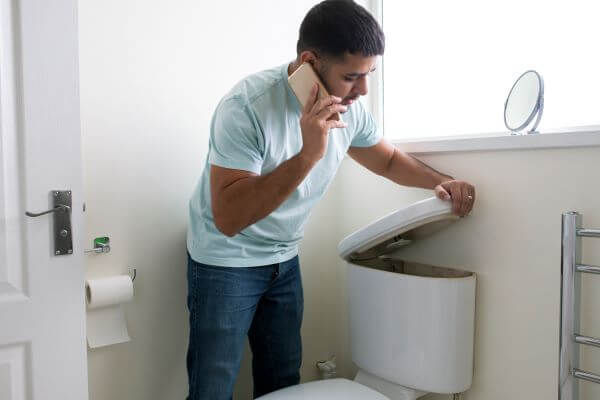
“I tried that already, no luck.”
Lifting the tank lid, I peek over the edge. We see tubes, a swing arm, chain, and rubber plug at the bottom.
“I don’t think I’ve ever looked inside a toilet.”
“Me neither.”
I reach my hand in the water, but my friend stops me.
“Gross! That’s toilet water!”
“The water is actually clean. It’s the same as the water that comes out of our faucets that we drink and use to shower!” I press down on the swinging plug and hear the water noise briefly stop.
“It’s simpler than I thought. See? When you flush, the chain lifts the plug which fills the bowl with water. The plug at the bottom isn’t sealing, so water keeps flowing into the bowl.”
“I think we can replace it and it shouldn’t cost much.” We turn off the water shutoff valve on the wall, grab the plug we need to swap, and flush the toilet to remove water from the tank before heading to the hardware store.
“How can I help you?”
“Just looking for a replacement part for a leaky toilet.”
The employee points us to the correct part and explains how common our problem is.
“This plug is called a flapper. They wear down over time and are usually the cause of toilet leaks. Leaky toilets are very common and can waste up to 200 gallons of water per day. That’s why we recommend that flappers should be replaced every five years.”
“Wow, I had no idea a leaky toilet could be wasting that much water.”
“It really can! Minor leaks account for nearly one trillion gallons of water wasted annually in the US. When it comes to saving water, every small action adds up to make a big difference. Even for people who don’t directly pay for their water benefit: less water being wasted reduces the demand on our water supply, meaning we’ll still have water when we need it the most.”
“Here’s one more tip for you—people usually know something is leaking from the sound of a drip, but toilet leaks are often silent. It’s easy to check for when you know what to do! Just put a few drops of food coloring in the tank, wait ten minutes without flushing, and then check the bowl. If you see color, there’s a leak!”
We finish our conversation, buy the flapper, and head home. Installing the flapper is simple; we reconnect the chain and snap it into place.
“Moment of truth! Let’s see if we fixed it.”
One flush and a drop of food coloring later, followed by a quiet white bowl afterward—exactly what we wanted.
“We did it! Thank you so much for the help.”
“No problem. There’s something that feels really good about being able to fix things with your own power and skills, don’t you think?”
“You’re right. Maybe I’ll try installing that new kitchen faucet.”
“Let me know when you do, I’ll be here. After all, what else are friends for?”
Want to tackle a DIY project this Fix a Leak Week? Learn more about fixing common household leaks and the Saving Water Partnership’s toilet rebate program at SavingWater.org.