In late June, the City of Seattle received national accolades with an All-America City Award issued by the National Civic League. A jury of national civic leaders recognized the City of Seattle for the community engagement work of the Department of Neighborhoods (DON) in partnership with Seattle City Light, Seattle Public Utilities (SPU), and the Office of Sustainability and Environment (OSE).
Among the programs highlighted were the Cedar River Watershed Tours and Food Action Plan. SPU Community Affairs spoke with SPU colleagues who were part of this citywide team effort – and continue to contribute – for insights about this work, equity, engagement, and sustainability.
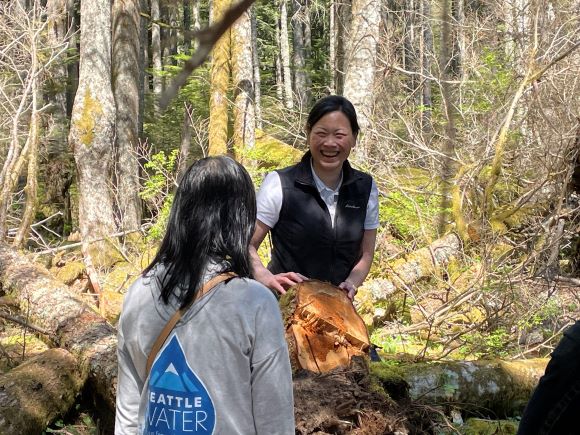
Cedar River Watershed Tours (Belinda Chin of SPU’s Water Line of Business)
Q: How did the idea of an Equitable Engagement Tour come about? Why is it important?
A: The idea of Equitable Engagement Tours originated years ago through a partnership between SPU Environmental Justice and Service Equity (EJSE) staff and the Department of Neighborhoods (DON). It was titled “Community Connections.”
Back then, the focus was on immigrant and refugee community groups. Not only did the community groups tour the Cedar River Watershed (CRW) and Education Center, EJSE also arranged visits to the Water Quality Lab, Transfer Stations, and other SPU facilities to familiarize them with the Utility’s diverse work.
Q: How are these tours the product of collaboration at SPU and the City of Seattle?
A: A collaboration between SPU’s Corporate Policy and Planning Division with DON in 2024 updated and revived the Watershed tours based on Community Connections. The CRW Public Programs team, several of whom facilitated tours during the Community Connections era, was happy to have this tour return.
In addition to immigrant and refugee groups, DON staff and community liaisons helped Black, Indigenous, and People of Color (BIPOC) community-based organizations across Seattle gain access to this opportunity. Several organizations remembered past tours and eagerly signed on for tour dates.
Q: What do you and your colleagues hope to achieve with these tours?
A: To address challenges of environmental justice and climate change, there is intention to engage with communities that are often left out due to past governmental harm. These tours offer a beautiful learning environment, fellowship with people, and connection with nature. It’s an opportunity to reconsider one’s relationship with the use of water in our daily lives.
We also want people to understand that the Cedar River Watershed is part of a larger system that offers high-quality, clean drinking water. We are all responsible for managing this essential resource carefully.
Q: What are some memorable moments from these tours?
A: For me, the most memorable moments have been about listening and learning how people express their knowledge and culture about water. Some of the most powerful moments have been standing in silence with people at Cedar Lake or at the falls.
I deeply value the opportunity to be of service as a City of Seattle employee.
(Watch: Video about the Equitable Engagement Tour)
Food Action Plan (Liz Fikejs and Sheryl Anayas of SPU’s Solid Waste Line of Business)
Q: Why is the Food Action Plan important, especially now, for Seattle, its businesses, and its residents?
A: The Food Action Plan (FAP) is important because it outlines actions the City of Seattle can take to support our local food system while addressing related topics of racial and social justice, food security and health, economic development, environmental sustainability, and more.
The Office of Sustainability and Environment led the development of the FAP in collaboration with dozens of other government departments, including SPU, and over 250 community leaders across the food system including Tribes and Tribal consultants, community-based organizations, food and environmental justice leaders, food business owners, workers, government policy advisors, philanthropists, and residents with direct experience with food insecurity and hunger.
Q: What is SPU doing to support businesses?
A: SPU is playing a role in helping the business community adopt food waste prevention practices. This will be especially important as Seattle gets ready for the FIFA World Cup games in June 2026. The City of Seattle is anticipating fans will double our population during the games – filling hotels, restaurants, and other businesses which provide food.
SPU is reaching out to hotels and other event venues, offering free technical assistance to implement waste prevention strategies. These measures not only reduce food waste but also save money in an industry facing rising food and labor costs.
Q: From an SPU perspective, what can Seattle residents easily do to help?
A: SPU encourages all Seattle residents to reduce waste at home by planning meals, storing food properly, and composting scraps. Simple actions – like using what’s already in the refrigerator – can significantly reduce food waste and shrink your climate footprint.
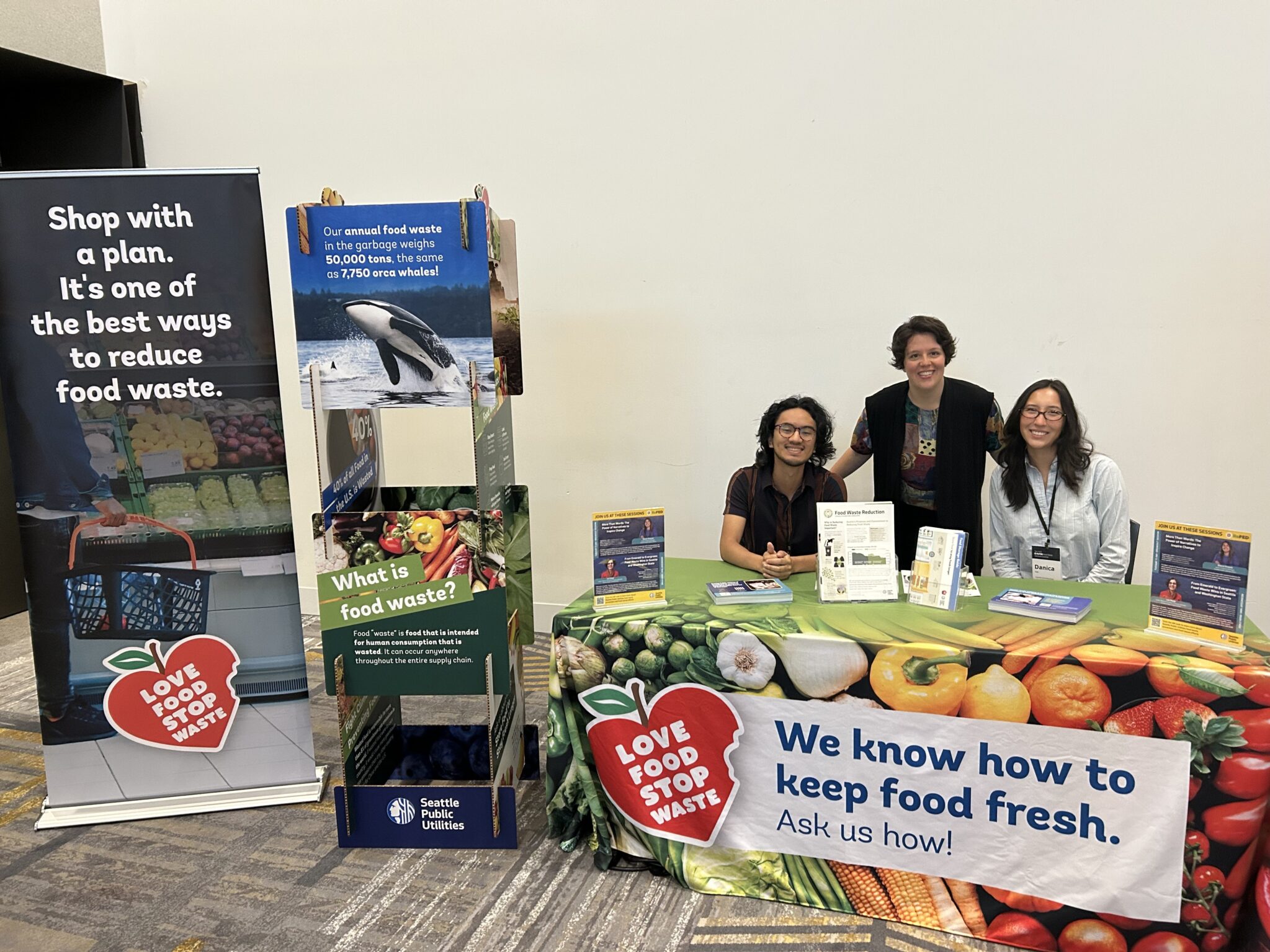
Seattle households throw away an average of $3,000 worth of food each year. That adds up to 50,000 tons of food waste annually – the equivalent weight of 7,750 orca whales – 20% of which ends up in garbage bins rather than compost.
Preventing food waste is one of the most impactful daily actions individuals can take to combat climate change and something every Seattle resident can do.
(Watch: Video about the Food Action Plan)